Matthew Grant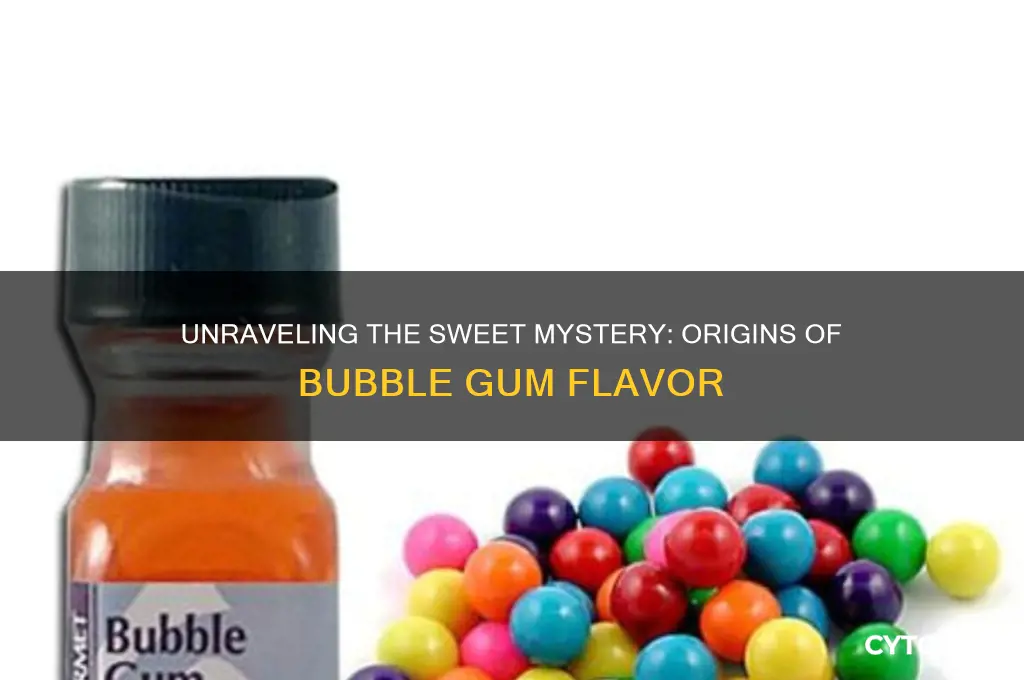
Bubble gum flavor, a nostalgic and beloved taste for many, is not derived from any single natural source but is instead a carefully crafted blend of artificial and natural ingredients. The distinctive sweet and fruity profile typically comes from a combination of esters, which are chemical compounds responsible for the fruity aromas found in foods like bananas, strawberries, and pineapples. Manufacturers often use synthetic compounds like isoamyl acetate (banana flavor) and ethyl butyrate (pineapple flavor) to create the signature bubble gum taste. Additionally, sweeteners such as sugar or corn syrup are added to enhance the overall flavor, while softeners like glycerin ensure the gum remains chewy. The exact recipe varies by brand, but the essence of bubble gum flavor lies in its ability to evoke a sense of childhood joy through its unique, artificially engineered taste.
| Characteristics | Values |
|---|---|
| Origin of Flavor | Bubble gum flavor primarily comes from a combination of synthetic compounds rather than natural sources. |
| Key Ingredients | Esters: Specifically, isoamyl acetate (banana-like scent) and other esters contribute to the fruity, sweet aroma. Synthetic Compounds: Artificial flavorings are used to create the distinctive taste. |
| Natural Influences | The flavor is often inspired by a blend of fruits like strawberry, cherry, and banana, though it is not derived directly from them. |
| Chemical Basis | The flavor is largely chemically engineered to mimic a sweet, fruity profile. |
| Historical Development | Bubble gum flavor was developed in the early 20th century, with the first commercially successful bubble gum, Dubble Bubble, introduced in 1928. |
| Commercial Use | Widely used in chewing gum, candies, and beverages for its recognizable and appealing taste. |
| Cultural Impact | Bubble gum flavor is iconic in American culture, often associated with childhood and nostalgia. |
| Variations | Different brands may have slight variations in flavor profile, but the core synthetic components remain consistent. |
What You'll Learn
- Artificial Flavor Compounds: Synthetic chemicals like esters mimic fruity, sweet tastes without natural ingredients
- Natural Extracts: Some gums use fruit oils or plant extracts for authentic flavor profiles
- Chemical Blends: Flavor chemists mix compounds to create unique, long-lasting taste experiences
- Sugar vs. Sugar-Free: Sweeteners like xylitol or aspartame influence flavor intensity and duration
- Manufacturing Process: Heat and pressure during production affect flavor release and consistency

Artificial Flavor Compounds: Synthetic chemicals like esters mimic fruity, sweet tastes without natural ingredients
The distinctive taste of bubble gum doesn’t come from strawberries, cherries, or any fruit plucked from nature. Instead, it’s crafted in labs through artificial flavor compounds, primarily esters, which are synthetic chemicals engineered to mimic fruity, sweet sensations. These compounds are the backbone of bubble gum’s iconic flavor, offering consistency and intensity that natural ingredients can’t match. For instance, ethyl butyrate, an ester with a pineapple-like aroma, is a common component, while amyl acetate contributes a banana-like note. Together, they create a flavor profile that’s instantly recognizable yet entirely artificial.
Creating these synthetic flavors involves precision. Flavorists blend esters in specific ratios to achieve the desired taste, often combining them with other chemicals like aldehydes and ketones to enhance complexity. The process is both art and science, requiring an understanding of how molecules interact with taste receptors. For example, a typical bubble gum flavor might include 30% ethyl butyrate, 20% amyl acetate, and smaller amounts of additional esters to round out the sweetness. These compounds are safe for consumption, regulated by agencies like the FDA, and used in concentrations as low as 0.01% to 0.1% in the final product.
One of the advantages of artificial flavor compounds is their stability. Unlike natural flavors, which can degrade over time or vary depending on the source, synthetic esters remain consistent, ensuring every piece of gum tastes the same. This reliability is crucial for mass-produced products like bubble gum, where consumer expectations are high. However, this consistency comes at a cost: the flavor is a chemical approximation, not a reflection of real fruit. For those seeking authenticity, it’s a trade-off between uniformity and naturalness.
If you’re curious about experimenting with these compounds, it’s possible to purchase food-grade esters online and create your own bubble gum flavor at home. Start with small quantities—a few drops of ethyl butyrate and amyl acetate in a sugar syrup base—and adjust to taste. Keep in mind that less is often more; these chemicals are potent, and overuse can result in an overpowering, unnatural flavor. Always follow safety guidelines, such as wearing gloves and working in a well-ventilated area, when handling concentrated flavor compounds.
In the end, the allure of bubble gum lies in its artificiality. It’s a flavor designed to delight, unbound by the limitations of nature. While it may not be “real,” its appeal is undeniable, a testament to the ingenuity of synthetic chemistry. Whether you view it as a marvel or a compromise, understanding the science behind these flavors adds a new layer of appreciation to every chew.
Is Bubble Gum Toxic to Dogs? Risks and Safety Tips
You may want to see also
Natural Extracts: Some gums use fruit oils or plant extracts for authentic flavor profiles
Bubble gum's flavor doesn't always come from artificial concoctions. Some brands prioritize authenticity, turning to nature's pantry for their flavor profiles. This approach leverages fruit oils and plant extracts, offering a taste experience that's both vibrant and true-to-source. For instance, citrus oils like orange or lemon provide a bright, zesty kick, while peppermint oil delivers a cool, refreshing sensation. These natural extracts are often more complex than their synthetic counterparts, containing a spectrum of compounds that contribute to a richer, more nuanced flavor.
Incorporating natural extracts into gum isn't just about taste; it's a strategic move to appeal to health-conscious consumers. Many people prefer products free from artificial additives, and gum manufacturers are responding. For example, a gum flavored with real strawberry extract might contain 2-5% fruit oil, ensuring a pronounced flavor without overwhelming the palate. This dosage is carefully calibrated to balance intensity and longevity, as natural flavors can be more volatile than synthetic ones. Brands often combine these extracts with other natural ingredients like xylitol or sorbitol, which not only sweeten the gum but also promote dental health.
However, using natural extracts comes with challenges. These ingredients can be more expensive and less stable than artificial flavors, requiring precise formulation to maintain consistency. For instance, citrus oils can oxidize over time, altering their flavor profile. To combat this, manufacturers might encapsulate the oils or use antioxidants like vitamin E to extend shelf life. Despite these hurdles, the demand for natural gum continues to grow, driven by consumers seeking products that align with their values.
For those interested in experimenting with natural gum flavors at home, the process is surprisingly accessible. Start by infusing gum bases with essential oils or fruit extracts, but exercise caution: essential oils are potent, and a little goes a long way. A single drop of peppermint oil can flavor an entire batch of gum, while fruit extracts might require a slightly higher concentration, around 3-5%. Always dilute oils in a carrier substance like glycerin before adding them to the gum base to ensure even distribution. This DIY approach not only allows for customization but also fosters a deeper appreciation for the art of flavor creation.
Ultimately, natural extracts in gum represent a fusion of tradition and innovation. By harnessing the essence of fruits and plants, manufacturers create products that resonate with consumers on a sensory and ethical level. Whether you're chewing store-bought gum or crafting your own, the use of natural extracts elevates the experience, proving that authenticity and flavor can go hand in hand. This trend is more than a passing fad; it's a reflection of a broader shift toward mindful consumption, where every ingredient tells a story.
Discover the Ultimate Bubble-Blowing Gum: Which Brand Reigns Supreme?
You may want to see also
Chemical Blends: Flavor chemists mix compounds to create unique, long-lasting taste experiences
The bubble gum flavor we all recognize doesn’t come from a single source in nature. It’s a masterpiece of chemical blending, crafted by flavor chemists who combine compounds to mimic and enhance the taste experience. These chemists rely on a palette of synthetic and natural ingredients, such as isoamyl acetate (banana-like), cinnamic aldehyde (spicy-sweet), and vanillin (vanilla), to create the familiar, long-lasting flavor. Each compound is carefully measured—for instance, isoamyl acetate is typically used at concentrations below 1% to avoid overpowering the blend—and layered to achieve a balanced, nostalgic taste.
To understand the process, imagine a painter mixing colors to achieve a specific shade. Flavor chemists follow a similar principle, but their medium is taste. They start with a base note, often a fruity or creamy profile, and gradually add modifiers to create depth. For bubble gum, a common formula includes a blend of esters for fruitiness, a touch of cooling agents like menthol (0.05–0.1% for subtlety), and sweeteners like sucralose or aspartame to prolong the flavor’s impact. The goal is to create a taste that lingers, enticing consumers to chew longer without becoming cloying.
One of the challenges flavor chemists face is ensuring consistency across batches. Environmental factors like temperature and humidity can alter the volatility of compounds, affecting the final flavor. To combat this, chemists often use encapsulation techniques, where flavor molecules are encased in a protective coating (e.g., maltodextrin or gum arabic) to release gradually. This not only extends the flavor’s lifespan but also allows for controlled dosing—a critical factor when working with potent compounds like ethyl butyrate, which can dominate a blend at concentrations above 0.2%.
For those curious about creating their own bubble gum flavor, start by experimenting with food-grade flavor oils and powders. Combine 0.5% banana flavor oil, 0.3% cherry flavor powder, and a pinch of vanillin in a sugar-free gum base. Adjust ratios based on preference, but remember: less is often more. Overloading on any single compound can result in a one-dimensional flavor. Always test small batches and allow the gum to rest for 24 hours to let the flavors meld.
The art of chemical blending in flavor chemistry is both precise and creative. It’s not just about replicating a taste but about evoking emotion and memory. Bubble gum flavor, with its playful, sugary essence, is a testament to this craft. By understanding the science behind these blends, we gain a deeper appreciation for the everyday flavors that shape our sensory experiences.
Best Bubble Gum for School Kids: Fun, Safe, and Parent-Approved Choices
You may want to see also
Sugar vs. Sugar-Free: Sweeteners like xylitol or aspartame influence flavor intensity and duration
The sweetness in bubble gum isn’t just about taste—it’s about chemistry. Sugar, the traditional sweetener, dissolves quickly on the tongue, delivering an immediate burst of flavor. However, this intensity fades rapidly as saliva breaks it down. Sugar-free alternatives like xylitol or aspartame, on the other hand, linger longer. Xylitol, for instance, releases sweetness more slowly, prolonging the gum’s flavor profile. Aspartame, being 200 times sweeter than sugar, requires far less quantity to achieve the same effect, but its stability varies with temperature and pH, affecting how long the gum stays flavorful. Understanding these mechanisms reveals why sugar-free gums often claim longer-lasting taste.
For those experimenting with homemade bubble gum, the choice of sweetener directly impacts flavor intensity and duration. Sugar provides a sharp, immediate sweetness but lacks staying power. To counteract this, combine it with a binding agent like corn syrup, which slows dissolution and extends flavor release. Sugar-free options require precision: xylitol can be used at a 1:1 ratio with sugar, but its cooling effect may alter the overall taste. Aspartame, due to its potency, should be dosed at 0.1–0.5% of the total weight of the recipe. Always test small batches to balance sweetness and longevity without overwhelming the gum’s other flavor components.
Health considerations further complicate the sugar vs. sugar-free debate. Sugar, while natural, contributes to tooth decay and spikes blood glucose levels. Xylitol, a sugar alcohol, not only sweetens but also inhibits bacterial growth in the mouth, making it a dentist-friendly choice. However, excessive xylitol consumption (over 30–50 grams daily) can cause digestive discomfort. Aspartame, though calorie-free, remains controversial due to mixed studies on its long-term effects. For children under 12, avoid aspartame altogether and limit xylitol intake to 5–10 grams per day. Always prioritize sweeteners that align with dietary needs and safety guidelines.
The sensory experience of bubble gum hinges on how sweeteners interact with flavor compounds. Sugar enhances fruit or mint notes by amplifying their initial impact but does little to sustain them. Sugar-free sweeteners, particularly xylitol, create a smoother, more gradual flavor release, ideal for complex profiles like strawberry-kiwi or peppermint. Aspartame’s intensity can overpower subtle flavors unless carefully balanced. To optimize flavor duration, pair sugar-free sweeteners with encapsulating agents like maltodextrin, which slowly release taste molecules over time. This technique is especially useful in long-lasting gums marketed for freshness or therapeutic benefits.
Ultimately, the choice between sugar and sugar-free sweeteners boils down to desired flavor dynamics and health priorities. Sugar delivers instant gratification but fades quickly, while xylitol and aspartame offer prolonged sweetness with distinct trade-offs. For casual gum chewers, sugar-free options provide a longer-lasting experience without the caloric guilt. For artisanal gum makers, blending sweeteners—say, 50% sugar and 50% xylitol—can achieve both immediate impact and sustained flavor. Always label products clearly, especially if using sugar alcohols or artificial sweeteners, to guide consumers in making informed choices.
Discover the Best Spots for Bubble Gum Ice Cream Delights
You may want to see also
Manufacturing Process: Heat and pressure during production affect flavor release and consistency
Heat and pressure are silent architects of bubble gum’s flavor profile, shaping not just its taste but its ability to deliver a lasting sensory experience. During manufacturing, the gum base—a blend of elastomers, resins, and waxes—is heated to temperatures between 120°C and 150°C (248°F to 302°F). This thermal treatment softens the base, allowing it to mix uniformly with flavor compounds, typically a combination of synthetic esters like isoamyl acetate (banana-like) and ethyl butyrate (fruity). However, excessive heat can volatilize these volatile compounds, diminishing the flavor’s intensity. Manufacturers must balance temperature and duration to ensure flavors are embedded without degradation.
Pressure plays an equally critical role, particularly during extrusion, where the heated gum is forced through dies to form consistent shapes. This process compresses the flavor molecules into the gum matrix, determining their release rate. Too little pressure results in uneven flavor distribution; too much can rupture the delicate emulsion, causing flavors to leach out prematurely. For instance, bubble gum’s signature "pop" of flavor upon chewing relies on controlled pressure during sheeting and scoring, ensuring the flavor is released in layers rather than all at once.
The interplay of heat and pressure also affects the gum’s texture, which indirectly influences flavor perception. A study in the *Journal of Food Engineering* found that gum bases subjected to 135°C for 10 minutes retained 85% of their flavor compounds, compared to 60% at 160°C. Similarly, extrusion pressures above 500 psi were linked to faster flavor release but shorter overall longevity. These findings underscore the precision required in manufacturing to achieve the desired balance between initial burst and sustained flavor.
Practical tips for small-scale producers include pre-cooling flavor oils to 10°C (50°F) before mixing to reduce heat exposure and using variable-speed extruders to fine-tune pressure. For home experimenters, mimicking industrial conditions with a stovetop and candy thermometer can yield insights, though achieving commercial-grade consistency remains challenging. Ultimately, mastering heat and pressure is less about following a recipe and more about understanding the science of flavor encapsulation and release.
In the end, the manufacturing process is a delicate dance where heat and pressure act as both enablers and disruptors. Their precise application transforms raw ingredients into the nostalgic, stretchy, and explosively flavorful bubble gum we know. Without this control, the flavor would either dissipate too quickly or remain locked within the gum base, leaving chewers with nothing but texture. This process is a testament to how technical precision can elevate even the simplest of pleasures.
The Surprising History of Bubble Gum: When It Was First Made
You may want to see also
Frequently asked questions
Bubble gum flavor primarily comes from a combination of artificial flavorings, including esters like isoamyl acetate, which mimic the taste of fruits like bananas and strawberries.
While some bubble gum may contain natural flavor extracts, most rely on synthetic compounds to achieve the signature sweet, fruity taste.
Bubble gum is specifically formulated with sweeter, fruitier artificial flavors, whereas chewing gum often uses mint or other more subtle flavorings.
No, bubble gum flavor is not derived from a single fruit or plant. It is a blend of artificial flavors designed to create a unique, sugary taste.