Ethan Brooks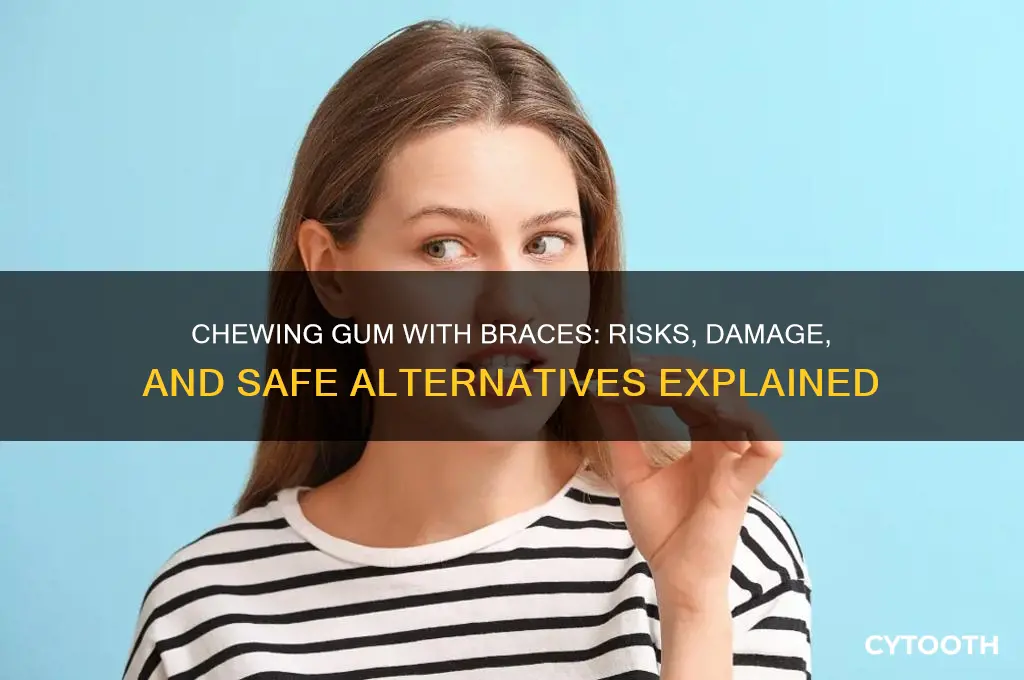
Chewing gum with braces can pose several risks and complications for orthodontic patients. While it may seem like a harmless habit, the sticky nature of gum can easily get trapped in the brackets and wires, leading to potential damage or misalignment. The force exerted during chewing can also put excessive pressure on the braces, causing them to break or become dislodged. Moreover, certain types of gum contain sugar or other ingredients that can contribute to tooth decay, which is especially concerning for individuals with braces, as maintaining good oral hygiene is already more challenging. As a result, orthodontists generally advise against chewing gum during the course of orthodontic treatment to ensure the best possible outcome and minimize the risk of complications.
| Characteristics | Values |
|---|---|
| Risk of Damage to Braces | Chewing gum can cause brackets to break or wires to bend. |
| Elastic Wear and Tear | Gum can stretch and damage elastic bands or other orthodontic components. |
| Difficulty in Cleaning | Gum can get stuck in braces, making it harder to clean teeth properly. |
| Increased Plaque Buildup | Stuck gum can lead to plaque accumulation, increasing the risk of cavities and gum disease. |
| Prolonged Treatment Time | Damage to braces may require repairs, potentially extending treatment duration. |
| Discomfort or Pain | Chewing gum can put pressure on teeth and braces, causing discomfort. |
| Alternative Recommendations | Orthodontists recommend sugar-free, braces-friendly gum if necessary, but generally advise avoiding it. |
| Potential for Tooth Misalignment | Excessive force from chewing gum can disrupt tooth movement. |
| Cost of Repairs | Damage to braces may result in additional expenses for repairs. |
| Oral Hygiene Challenges | Gum residue can interfere with brushing and flossing, compromising oral hygiene. |
What You'll Learn
- Increased Risk of Damage: Chewing gum can break or damage braces, leading to costly repairs
- Gum Sticking to Braces: Sticky gum can get stuck in braces, causing discomfort and cleaning issues
- Prolonged Treatment Time: Chewing gum may shift teeth, delaying orthodontic treatment progress
- Elastic Wear and Tear: Gum can stretch or dislodge elastic bands, affecting braces functionality
- Oral Hygiene Challenges: Gum residue can trap food, increasing plaque buildup and cavity risk

Increased Risk of Damage: Chewing gum can break or damage braces, leading to costly repairs
Chewing gum with braces is a risky habit that can lead to costly and inconvenient repairs. The sticky, elastic nature of gum makes it a formidable opponent for the delicate wires and brackets of orthodontic appliances. When you chew gum, the force exerted can cause the wires to bend or even break, and the brackets may become loose or detach from the teeth. This not only compromises the effectiveness of the braces but also poses a potential hazard, as sharp wires can irritate or injure the soft tissues of the mouth.
Imagine a scenario where a teenager, let's call them Alex, is undergoing orthodontic treatment and decides to chew gum despite the warnings. The gum gets stuck in the braces, and as Alex tries to dislodge it, the force applied causes a bracket to pop off. This small incident now requires an emergency visit to the orthodontist, where the bracket needs to be reattached, potentially delaying the overall treatment progress. The cost of such repairs can range from $50 to $200 per bracket, depending on the complexity and the orthodontist's fees. Over time, these expenses can add up, especially if multiple components are damaged.
The risk of damage is not limited to the braces themselves. Chewing gum can also harm the teeth and gums. The constant pulling and tugging motion can put excessive pressure on the teeth, leading to root resorption, a condition where the tooth's root structure is damaged. This is particularly concerning for younger patients, as their teeth are still developing. A study published in the *Angle Orthodontist* journal found that patients who chewed gum regularly during orthodontic treatment had a higher incidence of root resorption compared to those who avoided gum.
To minimize the risk of damage, orthodontists often advise patients to steer clear of gum altogether during treatment. However, for those who find it challenging to resist, there are some practical tips. Opt for sugar-free gum, as it is less sticky and reduces the risk of tooth decay. Choose brands specifically designed for braces, which are typically softer and less likely to cause harm. Most importantly, limit gum-chewing sessions to a maximum of 5-10 minutes at a time, and always be gentle. After chewing, carefully inspect your braces for any signs of damage and contact your orthodontist immediately if you notice any issues.
In summary, chewing gum with braces is a gamble that can result in broken wires, loose brackets, and even dental health complications. The potential for damage is high, and the financial implications of repairs can be significant. By understanding the risks and following simple precautions, patients can navigate their orthodontic journey without falling prey to the pitfalls of gum-chewing. It's a small sacrifice to ensure a smooth and successful treatment process.
Chewing Gum: Healthy Habit or Harmful Hobby? Uncovering the Truth
You may want to see also
Gum Sticking to Braces: Sticky gum can get stuck in braces, causing discomfort and cleaning issues
Chewing gum with braces can quickly turn into a sticky situation—literally. The soft, adhesive nature of gum makes it prone to getting trapped in the nooks and crannies of braces, particularly around brackets and wires. Once stuck, it can pull on sensitive areas, causing immediate discomfort or even minor pain. Unlike regular teeth, braces provide multiple surfaces for gum to adhere to, increasing the likelihood of it becoming a stubborn, hard-to-remove mess.
From a cleaning perspective, gum stuck in braces is a nightmare. It can wrap around wires, lodge between brackets and teeth, or even get pushed into hidden areas during chewing. This not only makes it difficult to remove but also creates a breeding ground for bacteria, potentially leading to plaque buildup or tooth decay. Orthodontists often warn that improper cleaning after such incidents can undo progress made in aligning teeth, as trapped debris undermines oral hygiene efforts.
To minimize the risk, consider switching to braces-friendly alternatives like sugar-free, non-sticky gums specifically designed for orthodontic patients. If gum does get stuck, avoid pulling it forcefully, as this can dislodge brackets or wires. Instead, use a toothbrush or orthodontic floss to gently work it loose, followed by a thorough rinse with water or mouthwash. Regular check-ins with your orthodontist can also help address any cleaning challenges before they escalate.
For those who can’t resist chewing gum, moderation and mindfulness are key. Chew slowly and avoid aggressive movements that could increase the chances of gum sticking. After chewing, inspect your braces in a mirror to catch any stuck pieces early. While gum itself isn’t always harmful, the consequences of it adhering to braces underscore the importance of caution and proactive care in maintaining orthodontic health.
Best Chewing Gum Options for Denture Wearers: Comfort and Safety Tips
You may want to see also
Prolonged Treatment Time: Chewing gum may shift teeth, delaying orthodontic treatment progress
Chewing gum with braces can inadvertently sabotage your orthodontic treatment. The sticky, elastic nature of gum allows it to adhere to brackets and wires, creating a tug-of-war with your teeth. Even orthodontic-approved gum, while less likely to damage braces, still poses a risk if chewed excessively. This constant force, though seemingly minor, can disrupt the precise pressure applied by your braces, causing teeth to shift in unintended directions.
Imagine a sculptor meticulously shaping clay, only to have someone else randomly poke and prod it. The result? A distorted masterpiece. Similarly, chewing gum interferes with the orthodontist's careful plan, potentially leading to prolonged treatment time as they work to correct the unintended movements.
The impact of gum chewing on treatment duration isn't instantaneous. It's a gradual process, like a slow leak in a tire. You might not notice the effects immediately, but over time, the cumulative force exerted by the gum can significantly alter tooth positioning. This means more adjustments, more appointments, and ultimately, a longer journey to your desired smile.
Think of it as taking a detour on a road trip. While the scenery might be interesting, it ultimately delays your arrival at the destination.
To avoid this orthodontic detour, it's crucial to prioritize discipline over temporary satisfaction. Opt for braces-friendly alternatives like sugar-free mints or hard candies that dissolve quickly. If you absolutely crave the chewing sensation, consult your orthodontist about safe alternatives like orthodontic wax or silicone chew toys designed specifically for braces wearers. Remember, the temporary pleasure of gum chewing pales in comparison to the long-term benefits of a healthy, straight smile achieved within the originally projected timeframe.
Sugar-Free Gum: A Sweet Habit for Healthy Teeth or Myth?
You may want to see also
Elastic Wear and Tear: Gum can stretch or dislodge elastic bands, affecting braces functionality
Chewing gum with braces can inadvertently turn a harmless habit into a costly orthodontic mishap, particularly when it comes to elastic bands. These small but mighty components are crucial for aligning teeth and jaws, yet they’re surprisingly vulnerable to the sticky, stretchy forces of gum. Each chew and pull can gradually elongate the elastics, reducing their tension and compromising their ability to apply the necessary pressure. Over time, this wear and tear diminishes their effectiveness, potentially derailing your treatment timeline.
Consider the mechanics: elastic bands are designed to withstand specific forces, but gum’s adhesive nature introduces an unaccounted-for variable. When gum gets stuck in the bands, it acts like a wedge, prying them apart or pulling them out of place. This isn’t just a minor inconvenience—dislodged bands can leave teeth unanchored, allowing them to shift back toward their original positions. For patients using elastics to correct bite issues, such as overbite or underbite, this can undo weeks of progress in a matter of days.
To mitigate this risk, orthodontists often advise avoiding gum altogether during treatment. However, if you’re determined to indulge, opt for sugar-free, non-sticky varieties and chew sparingly. After chewing, inspect your braces for any trapped gum or displaced bands. If you notice loose elastics, contact your orthodontist immediately for a replacement. Proactive care can prevent minor issues from escalating into major setbacks.
A comparative perspective highlights the difference between gum’s impact on braces with and without elastics. While traditional braces without bands might tolerate occasional gum chewing, those with elastics are far more susceptible to damage. This underscores the importance of tailoring habits to your specific orthodontic setup. Always consult your orthodontist for personalized advice, as their guidance is the most reliable safeguard against elastic wear and tear.
In summary, while chewing gum might seem innocuous, its interaction with elastic bands can significantly impair braces functionality. Stretched or dislodged elastics not only hinder progress but may also necessitate additional appointments and expenses. By understanding this risk and adopting preventive measures, you can protect your investment in a straighter smile and stay on track toward your orthodontic goals.
Chewing Gum and TMJ: Relief or Risk for Jaw Pain?
You may want to see also
Oral Hygiene Challenges: Gum residue can trap food, increasing plaque buildup and cavity risk
Chewing gum with braces can inadvertently turn a harmless habit into a dental dilemma, particularly when it comes to oral hygiene. The sticky nature of gum means it can easily adhere to braces, leaving behind residue that acts like a magnet for food particles. This trapped food becomes a breeding ground for bacteria, accelerating plaque buildup and significantly increasing the risk of cavities. For individuals with braces, who already face heightened challenges in maintaining clean teeth, this can exacerbate existing oral health issues.
Consider the mechanics of braces: brackets and wires create numerous nooks and crannies where food can hide. When gum residue enters the mix, it compounds the problem by providing an additional surface for debris to cling to. Unlike regular food particles, which can sometimes be dislodged with thorough brushing, gum residue is stubborn and requires meticulous cleaning to remove. This makes it crucial for brace-wearers to adopt a more rigorous oral care routine, including the use of interdental brushes and floss threaders, to minimize the risk of plaque accumulation.
The consequences of neglecting this issue are not merely cosmetic. Increased plaque buildup can lead to enamel erosion, gum inflammation, and even periodontal disease over time. For adolescents, who make up a significant portion of brace-wearers, these risks are particularly concerning, as poor oral hygiene habits established during this period can have long-term repercussions. A study published in the *Journal of Orthodontics* found that patients who chewed gum regularly while wearing braces had a 30% higher incidence of white spot lesions—early signs of tooth decay—compared to those who avoided gum.
To mitigate these risks, brace-wearers should steer clear of sticky or sugary gums altogether. If the urge to chew persists, opt for sugar-free, non-sticky alternatives specifically designed to be brace-friendly. Additionally, maintaining a strict oral hygiene regimen is non-negotiable. Brushing after every meal, using an orthodontic-friendly mouthwash, and scheduling regular dental check-ups can help counteract the challenges posed by gum residue. By staying proactive, individuals can enjoy the benefits of braces without falling prey to the oral hygiene pitfalls associated with chewing gum.
Chewing Mastic Gum: Optimal Time for Digestive Health Benefits
You may want to see also
Frequently asked questions
Yes, chewing gum can damage braces by sticking to the brackets and wires, potentially bending or breaking them.
Sugar-free, non-sticky gum labeled as "orthodontic-friendly" may be safer, but it’s still best to avoid gum altogether while wearing braces.
Stuck gum can pull on brackets and wires, causing discomfort or damage, and it may require a visit to the orthodontist for repair.
Yes, damage caused by chewing gum can extend your treatment time if repairs are needed or if progress is slowed by misaligned components.