Matthew Grant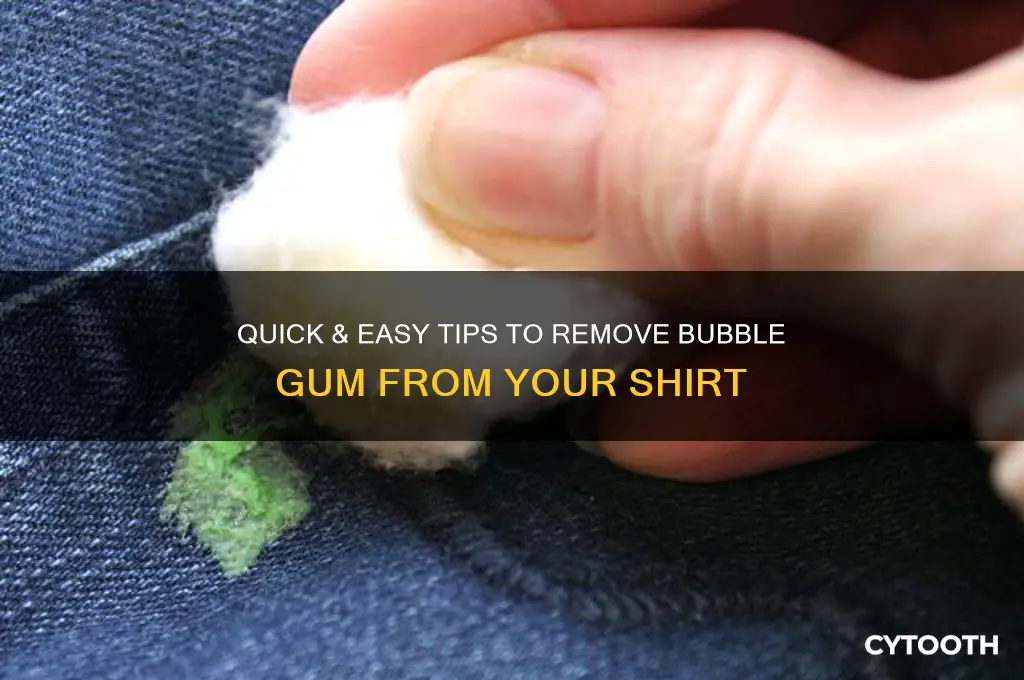
Removing bubble gum from a shirt can be a tricky task, but with the right approach, it’s entirely manageable. The key is to act quickly and use the appropriate method to avoid damaging the fabric. Start by freezing the gum with an ice cube or placing the garment in a plastic bag and freezing it for a few hours, which hardens the gum for easier removal. Once frozen, gently scrape off as much gum as possible using a butter knife or spoon. For any remaining residue, apply a solvent like rubbing alcohol, vinegar, or peanut butter directly to the area, let it sit for a few minutes, and then scrub with a toothbrush. Finally, wash the shirt as usual to ensure all traces of gum and cleaning agents are removed. Following these steps will help restore your shirt to its original condition.
| Characteristics | Values |
|---|---|
| Method 1: Freezing | Place the gum-affected area in a plastic bag and freeze for 1-2 hours. Scrape off the frozen gum with a butter knife or spoon. |
| Method 2: Peanut Butter | Rub a tablespoon of peanut butter onto the gum to break down the adhesive. Let it sit for 5-10 minutes, then scrape off the gum and wash the shirt. |
| Method 3: Vinegar and Baking Soda | Mix equal parts white vinegar and baking soda to form a paste. Apply the paste to the gum, let it sit for 15-20 minutes, then scrape off the gum and wash the shirt. |
| Method 4: Rubbing Alcohol | Apply a small amount of rubbing alcohol to the gum and let it sit for 5-10 minutes. Scrape off the gum and wash the shirt. |
| Method 5: Hair Dryer and Ice | Use a hair dryer to warm the gum, then quickly apply an ice cube to harden it. Scrape off the gum with a butter knife or spoon. |
| Method 6: Commercial Gum Remover | Apply a commercial gum remover product according to the manufacturer's instructions. Scrape off the gum and wash the shirt. |
| Precaution | Always test any method on a small, inconspicuous area of the shirt first to avoid damage. |
| Washing Instructions | After removing the gum, wash the shirt according to the care label instructions to remove any residue. |
| Effectiveness | Varies depending on the method and the type of fabric. Freezing and peanut butter methods are generally effective for most fabrics. |
| Time Required | 10 minutes to 2 hours, depending on the method chosen. |
| Materials Needed | Varies by method (e.g., plastic bag, butter knife, peanut butter, vinegar, baking soda, rubbing alcohol, hair dryer, ice, commercial gum remover). |
| Suitable Fabrics | Most methods are safe for cotton, polyester, and other common fabrics. Avoid using heat-based methods on delicate fabrics. |
| Environmental Impact | Natural methods (e.g., freezing, vinegar, and baking soda) are more environmentally friendly than commercial products. |
| Cost | Low to moderate, depending on the method and materials used. |
What You'll Learn

Freeze Method: Harden gum with ice, scrape off, wash
The freeze method is a tried-and-true technique for removing bubble gum from fabric, leveraging the principles of thermal contraction to make the gum brittle and easier to remove. By applying ice directly to the gum, you lower its temperature, causing it to harden and lose its adhesive properties. This method is particularly effective because it avoids the risk of spreading the gum further into the fabric, a common issue with other removal techniques.
To execute the freeze method, start by isolating the affected area of the shirt. Place the garment on a flat surface, ensuring the gum is exposed and not pressed against another layer of fabric. Take an ice cube, preferably wrapped in a thin plastic bag or cloth to prevent water from soaking the shirt, and hold it directly against the gum. Apply gentle pressure, allowing the ice to penetrate the gum’s surface. For larger gum masses, multiple ice cubes or a small bag of frozen vegetables can be used to cover the entire area. Maintain contact for 10–15 minutes, or until the gum feels hard to the touch.
Once the gum is sufficiently hardened, use a dull knife, spatula, or the edge of a credit card to scrape it off. Work slowly and carefully to avoid damaging the fabric fibers. Begin at the edges of the gum, gradually lifting it away from the shirt. If any residue remains, repeat the freezing process and scrape again. After the gum is removed, treat the area with a stain remover or a mixture of dish soap and warm water to eliminate any lingering oils or discoloration.
A key advantage of the freeze method is its versatility and safety for most fabrics, including delicate materials that might be damaged by chemical solvents or heat. However, caution should be exercised with extremely fragile fabrics, as scraping could cause tears. Additionally, while this method is effective for fresh gum, older, dried-on gum may require additional treatments, such as pre-soaking in vinegar or rubbing alcohol, before freezing.
In comparison to other methods like using peanut butter or commercial solvents, the freeze method stands out for its simplicity and minimal risk of side effects. It requires no special products, only household items like ice and a scraping tool. For best results, act quickly after the gum adheres to the shirt, as fresh gum responds more readily to freezing. With its combination of effectiveness and ease, the freeze method remains a go-to solution for gum removal, proving that sometimes the coldest approach is the most practical.
Discover the Ultimate Bubble-Blowing Gum: Which Brand Reigns Supreme?
You may want to see also
Peanut Butter Trick: Apply, let sit, wipe away gum residue
The peanut butter trick is a surprisingly effective method for removing bubble gum from fabric, leveraging the oily nature of peanut butter to break down the gum's sticky polymers. Unlike harsh chemicals or vigorous scrubbing, this approach is gentle on most fabrics and utilizes a household staple. The process is straightforward: apply a generous amount of creamy peanut butter (about 1-2 tablespoons) directly onto the gum, ensuring it’s fully covered. Let it sit for 5-10 minutes, allowing the oils to penetrate and loosen the gum’s grip. Finally, wipe away the residue with a cloth or spatula, followed by a rinse or wash to remove any oily traces.
From an analytical perspective, the success of the peanut butter trick lies in its chemical interaction with the gum. Bubble gum’s adhesive properties come from its resin and latex components, which are insoluble in water but soluble in oils. Peanut butter, rich in natural oils, acts as a solvent, dissolving the gum’s sticky matrix without damaging the fabric fibers. This method is particularly effective on natural fabrics like cotton or wool, though it may require additional washing for delicate or synthetic materials to avoid oil stains.
For those seeking a step-by-step guide, begin by scraping off as much excess gum as possible using a butter knife or credit card. Next, apply a thick layer of creamy peanut butter (chunky varieties may scratch delicate fabrics). Allow it to sit for 5-10 minutes, then use a cloth or spatula to lift away the gum and peanut butter mixture. Rinse the area with warm water and mild detergent to remove any residual oil. For stubborn cases, repeat the process or follow up with a machine wash.
A comparative analysis reveals that the peanut butter trick holds its own against other gum removal methods. While freezing with ice or using commercial solvents like Goo Gone can be effective, peanut butter is a more accessible and eco-friendly option. It’s also less likely to cause fabric discoloration or damage compared to rubbing alcohol or acetone. However, it’s crucial to test the method on a small, inconspicuous area first, especially for colored or delicate garments, to ensure no adverse reactions occur.
In practice, the peanut butter trick is a go-to solution for parents, teachers, and anyone dealing with gum mishaps. Its simplicity and effectiveness make it a favorite among DIY enthusiasts. For best results, use natural, unsweetened peanut butter, as additives in flavored varieties may leave behind residue. Keep in mind that while this method works wonders on clothing, it’s less suitable for upholstery or carpets, where oil absorption can be an issue. With a little patience and a jar of peanut butter, removing bubble gum becomes a hassle-free task.
The Surprising History of Bubble Gum: When It Was First Made
You may want to see also
Vinegar Solution: Soak in vinegar, scrub, rinse thoroughly
A vinegar solution can be a surprisingly effective way to remove bubble gum from clothing. Its acidic nature breaks down the gum's polymers, making it easier to remove. This method is particularly useful for delicate fabrics that might be damaged by scraping or freezing.
White vinegar is the preferred choice due to its mild acidity and lack of coloring agents that could stain the fabric.
The Process: Begin by scraping off as much of the gum as possible using a butter knife or similar tool. This initial step prevents the gum from spreading further into the fabric. Next, mix a solution of one part white vinegar to two parts warm water. The warmth helps activate the vinegar's properties, enhancing its effectiveness. Submerge the affected area of the shirt in the solution, ensuring it is fully saturated. Allow it to soak for at least 30 minutes, though stubborn stains may require up to an hour.
After soaking, gently scrub the area with a soft-bristled brush or an old toothbrush. The vinegar will have softened the gum, making it easier to dislodge. Be gentle to avoid damaging the fabric fibers. For particularly stubborn gum, you can apply a small amount of undiluted vinegar directly to the gum and let it sit for 10 minutes before scrubbing again.
Rinsing and Aftercare: Once the gum is removed, rinse the shirt thoroughly with cold water to eliminate any vinegar residue. This step is crucial, as leftover vinegar can cause discoloration or an unpleasant odor. After rinsing, launder the shirt as usual, following the care instructions on the label. Air drying is recommended to prevent any potential heat damage from a dryer, especially if the fabric is delicate.
This vinegar solution method is a simple, cost-effective, and eco-friendly way to tackle gum stains. It's a handy trick to know, especially for parents dealing with children's clothing or anyone who enjoys chewing gum. With its accessibility and effectiveness, it's a go-to solution for a common, sticky problem.
Blowing the Biggest Bubble: A Science Project on Bubble Gum
You may want to see also
Hair Dryer Technique: Heat gum, peel off, clean area
A hair dryer can be a surprisingly effective tool for removing bubble gum from a shirt, leveraging the principle that heat softens gum, making it easier to detach. This method is particularly useful for delicate fabrics that might be damaged by scraping or harsh chemicals. By applying controlled heat, you can minimize the risk of spreading the gum or harming the fabric. However, success depends on precision and patience, as overheating can embed the gum further or scorch the material.
To begin, set your hair dryer to its highest heat setting and hold it about 2–3 inches away from the gum. Gradually move the dryer in a circular motion to evenly distribute the heat, avoiding direct, prolonged contact with the fabric. The goal is to warm the gum until it becomes pliable but not melted, which typically takes 30–60 seconds. Be cautious with synthetic fabrics like polyester, as they can melt under high heat—in such cases, reduce the temperature or opt for a lower setting.
Once the gum is softened, use a butter knife or a plastic scraper to gently peel it off the fabric. Work slowly and carefully to avoid stretching or tearing the material. If the gum resists, reapply heat for another 10–15 seconds and try again. After removing the bulk of the gum, there may still be residue left behind. To clean the area, apply a small amount of rubbing alcohol or a stain remover directly to the spot, let it sit for 5 minutes, then blot with a clean cloth until the residue is gone.
While the hair dryer technique is effective, it’s not without risks. Overheating can damage certain fabrics, and incomplete removal may leave a sticky film. For best results, test the method on a small, inconspicuous area of the garment first. Additionally, this technique is most suitable for adults or older children, as the use of a hair dryer and scraping tools requires careful handling. With the right approach, however, this method can save a favorite shirt from a sticky fate, proving that sometimes, a little heat goes a long way.
Is Bubble Gum Toxic to Dogs? Risks and Safety Tips
You may want to see also
Commercial Removers: Use gum remover products, follow instructions, wash shirt
Commercial gum removers are specifically formulated to break down the polymers in chewing gum, making them a reliable solution for stubborn stains. These products typically contain solvents like citrus oil, isopropyl alcohol, or other chemical agents that dissolve the gum’s adhesive properties. When selecting a remover, look for one labeled safe for fabrics, as some harsher formulas may damage delicate materials. Always check the garment’s care label to ensure compatibility, especially for dry-clean-only or sensitive fabrics like silk or wool.
To use a commercial gum remover effectively, start by scraping off as much excess gum as possible with a blunt knife or edge of a credit card. This minimizes the amount of gum the remover needs to tackle. Next, apply the product directly to the stain, following the manufacturer’s instructions for dosage—typically a small amount is sufficient. Allow the remover to sit for the recommended time, usually 5–10 minutes, to penetrate and loosen the gum. Avoid over-saturating the fabric, as this can spread the stain or leave residue.
After treating the stain, gently lift away the softened gum with a clean cloth or spatula. Be cautious not to rub, as this can push the gum further into the fibers. Once the gum is removed, rinse the area with cold water to eliminate any remaining product or residue. Finally, wash the shirt as usual, using the warmest water safe for the fabric. For best results, pre-treat the area with a stain remover or laundry detergent before washing to ensure no traces of gum or remover remain.
While commercial removers are effective, they require careful handling. Always work in a well-ventilated area, as some products emit strong fumes. Keep them out of reach of children and pets, and wear gloves if the remover contains harsh chemicals. If the shirt is heavily soiled or the fabric is particularly delicate, consider testing the product on a small, inconspicuous area first to avoid discoloration or damage. With proper use, these removers offer a straightforward, efficient solution for gum stains, restoring your garment to its original condition.
Can Bubble Gum Harm Groundhogs? Uncovering the Truth Behind the Myth
You may want to see also
Frequently asked questions
The best method is to freeze the gum using ice or a freezer pack, then scrape it off gently with a butter knife or spoon.
No, hot water can set the gum further into the fabric. Instead, use cold water or freezing methods to harden the gum for easier removal.
Apply a small amount of rubbing alcohol or peanut butter to the residue, let it sit for a few minutes, then wipe or wash it away.
No, using a dryer can melt the gum and permanently embed it into the fabric. Always remove the gum before drying.
Yes, white vinegar can help dissolve gum residue. Apply it directly, let it sit for 10–15 minutes, then scrub and rinse thoroughly.