Matthew Grant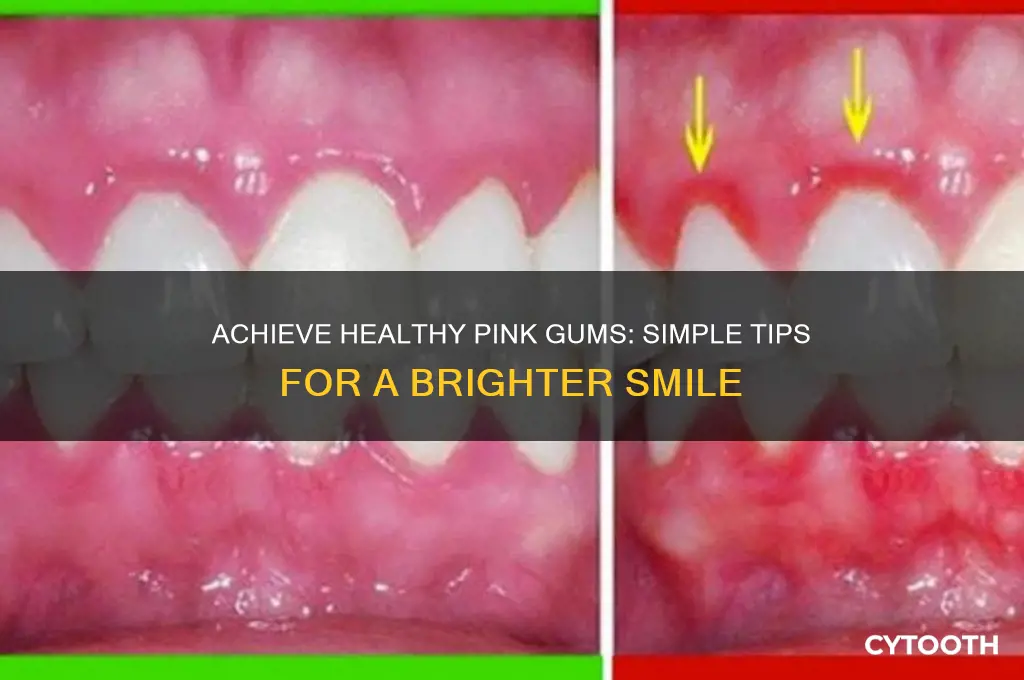
Achieving pink, healthy gums is a common goal for many, as it not only enhances oral aesthetics but also indicates good oral hygiene. Pink gums signify robust blood circulation and the absence of inflammation or infection, which are often associated with gum diseases like gingivitis or periodontitis. To make gums pink, it's essential to adopt a consistent oral care routine, including twice-daily brushing with a soft-bristled toothbrush, daily flossing, and regular use of antimicrobial mouthwash. Additionally, incorporating a balanced diet rich in vitamins C and K, which promote gum health, and avoiding tobacco products can significantly improve gum color. Regular dental check-ups and professional cleanings are also crucial, as they help remove plaque and tartar buildup that can cause gum discoloration. By combining these practices, individuals can effectively restore and maintain the natural pink hue of their gums.
| Characteristics | Values |
|---|---|
| Oral Hygiene | Brush teeth twice daily with a soft-bristled toothbrush; floss daily to remove plaque and food particles. |
| Gum Massage | Gently massage gums with a clean finger or soft toothbrush to improve blood circulation. |
| Mouthwash | Use an antibacterial or herbal mouthwash (e.g., with tea tree oil or chlorhexidine) to reduce gum inflammation. |
| Diet | Consume vitamin C-rich foods (e.g., oranges, strawberries) and antioxidants (e.g., green tea) to promote gum health. |
| Hydration | Drink plenty of water to prevent dry mouth and maintain gum moisture. |
| Quit Smoking | Avoid tobacco products, as smoking causes gum discoloration and disease. |
| Oil Pulling | Swish coconut or sesame oil in the mouth for 10–15 minutes daily to reduce bacteria and improve gum color. |
| Professional Cleaning | Visit a dentist every 6 months for scaling and polishing to remove tartar and stains. |
| Avoid Irritants | Limit alcohol, coffee, and acidic foods that can irritate gums and cause discoloration. |
| Gum Exercises | Practice gum exercises like chewing sugar-free gum or using a gum stimulator to enhance blood flow. |
| Herbal Remedies | Apply aloe vera gel or turmeric paste to gums for their anti-inflammatory and healing properties. |
| Healthy Lifestyle | Maintain a balanced diet, exercise regularly, and manage stress to support overall gum health. |
What You'll Learn
- Diet for Gum Health: Eat vitamin C-rich foods, crunchy veggies, and dairy for stronger, pinker gums
- Proper Brushing Techniques: Use soft bristles, brush gently, and clean gum lines to prevent irritation
- Natural Remedies: Apply aloe vera, coconut oil, or turmeric paste to soothe and pinkify gums
- Hydration and Lifestyle: Drink water, avoid tobacco, and reduce stress for healthy gum color
- Professional Treatments: Consider gum bleaching, scaling, or laser therapy for lasting pink gums

Diet for Gum Health: Eat vitamin C-rich foods, crunchy veggies, and dairy for stronger, pinker gums
Vitamin C is a powerhouse nutrient for gum health, playing a critical role in collagen synthesis—the protein that keeps gums firm and resilient. A deficiency can lead to scurvy, historically marked by swollen, bleeding gums. To maintain optimal levels, adults should aim for 75-90 mg of vitamin C daily, easily achieved through diet. Incorporate citrus fruits like oranges (70 mg per medium fruit), strawberries (98 mg per cup), and bell peppers (152 mg per cup, raw). For those with busy lifestyles, a morning smoothie blending kiwi, spinach, and lemon juice can provide a concentrated dose without relying on supplements.
Crunchy vegetables act as nature’s toothbrush, mechanically stimulating gums and reducing plaque buildup. Carrots, celery, and apples are particularly effective due to their fibrous texture. A study in the *Journal of Periodontology* found that participants who consumed crunchy veggies daily had 30% less gum inflammation compared to those who didn’t. Pair these with vitamin C-rich dips like hummus (made with lemon juice) or yogurt (with added berries) to maximize benefits. For children and teens, whose gums are still developing, make it a game: challenge them to finish a "crunch quota" of 2-3 servings daily.
Dairy products, rich in calcium and phosphorus, strengthen teeth and gums by remineralizing enamel and supporting bone density. A 2018 study in *Nutrients* linked higher dairy intake to reduced gum recession in adults over 40. Aim for 2-3 servings daily—a glass of milk (300 mg calcium), a cup of yogurt (450 mg), or a slice of cheddar cheese (200 mg). For lactose-intolerant individuals, fortified plant-based alternatives like almond milk (45% DV calcium per cup) or lactose-free kefir provide similar benefits. Pair dairy with vitamin C-rich foods to enhance calcium absorption, such as a strawberry-topped Greek yogurt parfait.
Combining these dietary strategies creates a synergistic effect. For instance, a mid-morning snack of apple slices with cheddar cheese provides mechanical gum stimulation, calcium, and phosphorus, while a vitamin C-rich orange at lunch bolsters collagen production. For older adults, whose gums naturally thin with age, this approach can slow recession and maintain pink, healthy tissue. Track progress by noting gum color and texture monthly—consistent adherence should yield visible results within 3-6 months. Remember, diet alone isn’t a substitute for brushing and flossing, but it’s a cornerstone of holistic gum care.
Does Zyn Cause Gum Recession? Uncovering the Truth and Risks
You may want to see also
Proper Brushing Techniques: Use soft bristles, brush gently, and clean gum lines to prevent irritation
Healthy gums are a vibrant pink, a sign of good oral hygiene and overall well-being. Achieving and maintaining this color requires more than just a quick scrub with any old toothbrush. The key lies in a gentle, precise approach that prioritizes gum health.
Soft bristles are your allies in this quest. Unlike their harder counterparts, which can be abrasive and damaging, soft bristles effectively remove plaque and debris without irritating the delicate gum tissue. Imagine massaging your gums, not scrubbing them raw. This gentle action stimulates blood flow, promoting a healthy pink hue.
Brushing technique is equally crucial. Hold your toothbrush at a 45-degree angle to your gums, using short, circular motions. Avoid sawing back-and-forth, which can cause recession and expose sensitive root surfaces. Think of it as painting your gums with gentle strokes, not sanding them down.
Paying special attention to the gum line is paramount. This is where plaque and bacteria tend to accumulate, leading to inflammation and discoloration. Angle your brush slightly to reach this area, ensuring a thorough clean without being aggressive.
Consistency is key. Brush twice daily for two minutes each time, ensuring you cover all surfaces of your teeth and gums. Remember, it's not about force, but about precision and regularity. By adopting these proper brushing techniques, you'll not only achieve healthier, pinker gums but also contribute to your overall oral health, preventing issues like gingivitis and periodontitis.
Natural Remedies: Apply aloe vera, coconut oil, or turmeric paste to soothe and pinkify gums
Aloe vera, a succulent known for its healing properties, can be a gentle yet effective remedy for gum health. Its anti-inflammatory and antimicrobial qualities help reduce gum inflammation and promote a healthier, pinker appearance. To use, extract fresh gel from an aloe leaf and apply it directly to the gums using a clean finger or a soft toothbrush. Leave it on for 5–10 minutes before rinsing with warm water. Repeat this process twice daily for best results. For those with sensitive gums, start with a small amount to ensure no irritation occurs.
Coconut oil, rich in lauric acid, offers both antimicrobial and moisturizing benefits, making it an excellent choice for gum care. Oil pulling, an ancient practice, involves swishing a tablespoon of organic, cold-pressed coconut oil in the mouth for 10–15 minutes. This method helps remove toxins, reduce bacteria, and improve gum color. Alternatively, apply a small amount directly to the gums using a cotton swab and leave it on for 5 minutes before rinsing. This remedy is safe for adults and can be incorporated into daily oral hygiene routines.
Turmeric, a vibrant spice with potent anti-inflammatory and antioxidant properties, can be transformed into a paste to soothe and pinkify gums. Mix ½ teaspoon of turmeric powder with a few drops of water or coconut oil to create a thick paste. Apply it gently to the gums using a clean finger or toothbrush, leaving it on for 3–5 minutes before rinsing thoroughly. Be cautious, as turmeric can temporarily stain the skin and teeth, though this is harmless and fades quickly. Use this remedy 2–3 times a week for optimal results.
While these natural remedies are generally safe, it’s essential to approach them with care. Aloe vera and coconut oil are mild and suitable for most age groups, but turmeric should be used sparingly by children or those with sensitive gums. Always patch-test new remedies to avoid adverse reactions. For persistent gum issues, consult a dentist to rule out underlying conditions. When used consistently and correctly, these natural treatments can complement traditional oral care, fostering healthier, pinker gums.
Hydration and Lifestyle: Drink water, avoid tobacco, and reduce stress for healthy gum color
Staying properly hydrated is one of the simplest yet most overlooked ways to maintain healthy gum color. When your body lacks sufficient water, blood flow to the gums decreases, causing them to appear pale or inflamed. Aim for at least 8–10 cups (64–80 ounces) of water daily, adjusting for activity level, climate, and health conditions. Carry a reusable water bottle to track intake, and incorporate hydrating foods like cucumbers, watermelon, and oranges into your diet. Even mild dehydration can compromise oral health, so make hydration a non-negotiable daily habit.
Tobacco use, whether smoked or chewed, is a direct antagonist to pink, healthy gums. Nicotine constricts blood vessels, reducing oxygen and nutrient delivery to gum tissues, while tar and chemicals stain and irritate the oral cavity. Quitting tobacco is the single most impactful lifestyle change for gum health. Consider nicotine replacement therapies, support groups, or prescription medications like varenicline to ease withdrawal. Within weeks of quitting, improved blood flow will begin to restore gum color and texture, though full recovery may take months. Avoid substituting smoking with vaping, as e-cigarettes also impair circulation and tissue health.
Chronic stress triggers the release of cortisol, a hormone that suppresses immune function and promotes inflammation—both detrimental to gum health. When stressed, the body prioritizes survival over tissue repair, leaving gums vulnerable to discoloration and disease. Incorporate stress-reducing practices like mindfulness meditation, yoga, or progressive muscle relaxation for 10–20 minutes daily. Physical activity, such as brisk walking or swimming, also lowers cortisol levels while boosting circulation. Prioritize sleep (7–9 hours per night) to allow tissues to regenerate, and establish boundaries to minimize stressors where possible.
The interplay of hydration, tobacco avoidance, and stress management creates a synergistic effect on gum health. For instance, staying hydrated supports saliva production, which neutralizes acids and protects gums, while quitting tobacco eliminates a major source of oxidative stress. Similarly, reduced stress enhances the body’s ability to heal and maintain tissue integrity. View these habits not as isolated tasks but as interconnected pillars of oral wellness. Start with one change—increasing water intake, for example—and build from there, leveraging each improvement to motivate the next. Consistency, not perfection, is key to achieving and sustaining pink, vibrant gums.
Professional Treatments: Consider gum bleaching, scaling, or laser therapy for lasting pink gums
Achieving lasting pink gums often requires more than home remedies, especially when discoloration persists due to factors like genetics, smoking, or gum disease. Professional treatments like gum bleaching, scaling, and laser therapy offer targeted solutions that address the root cause of discoloration while improving overall gum health. These procedures, performed by dental specialists, provide results that are both immediate and long-lasting, making them ideal for those seeking a reliable transformation.
Gum bleaching, for instance, involves applying a safe, dentist-approved whitening agent directly to the gum tissue to lighten its color. Unlike over-the-counter products, professional bleaching uses controlled concentrations of carbamide peroxide or hydrogen peroxide, minimizing the risk of irritation. This treatment is particularly effective for discoloration caused by melanin deposits or external stains from substances like coffee or tobacco. However, it’s not suitable for everyone—individuals with sensitive gums or active gum disease should consult their dentist first. The procedure typically takes 30–60 minutes, with results lasting up to two years depending on oral hygiene and lifestyle habits.
Scaling and root planing, on the other hand, is a deep-cleaning procedure that removes plaque, tartar, and bacteria from below the gumline. This treatment is especially beneficial for those with gum disease, as it eliminates the infection that often causes gums to appear red, swollen, or discolored. During the procedure, a dentist or hygienist uses specialized tools to scrape away buildup and smooth the tooth roots, promoting gum reattachment and reducing inflammation. While it may require local anesthesia and multiple sessions, the result is healthier, firmer gums that naturally regain a pink hue. Maintenance is key post-treatment—regular brushing, flossing, and dental check-ups are essential to prevent recurrence.
Laser therapy represents a cutting-edge option for gum pinkening, combining precision with minimal discomfort. Using a dental laser, the dentist removes excess gum tissue, reshapes the gums, and targets pigmentation. The laser’s energy also stimulates collagen production, enhancing gum firmness and color. This method is particularly advantageous for those with uneven gum lines or stubborn discoloration, as it promotes faster healing and reduces the risk of infection compared to traditional surgical techniques. While the cost is higher than other treatments, its efficiency and long-term results make it a worthwhile investment for many.
Before opting for any professional treatment, it’s crucial to assess your candidacy and expectations. Factors like age, overall oral health, and the underlying cause of discoloration play a significant role in determining the most effective approach. For example, younger adults with mild staining may benefit from bleaching, while older individuals with gum recession might require scaling or laser therapy. Always consult a qualified dentist for a personalized plan, as improper treatment can exacerbate issues rather than resolve them. With the right professional intervention, achieving and maintaining pink gums is not just possible—it’s sustainable.
Frequently asked questions
Natural remedies include oil pulling with coconut or sesame oil, massaging gums with aloe vera gel, and using turmeric paste due to its anti-inflammatory properties.
Yes, a diet rich in vitamin C, antioxidants, and anti-inflammatory foods like berries, leafy greens, and nuts can promote healthy, pink gums by reducing inflammation and improving blood circulation.
Absolutely. Using a soft-bristled toothbrush and gentle, circular motions can prevent gum irritation and recession, helping maintain their natural pink color. Avoid aggressive brushing.
Yes, quitting smoking is crucial. Smoking causes gum discoloration, inflammation, and reduces blood flow. Over time, quitting can restore gum health and their natural pink hue.